


AML (Acute Myeloid Leukemia) क्या है? लक्षण, कारण, जांच और इलाज
Comprehensive Clinical Overview • Diagnostic Testing • Advanced Targeted Therapy & BMT
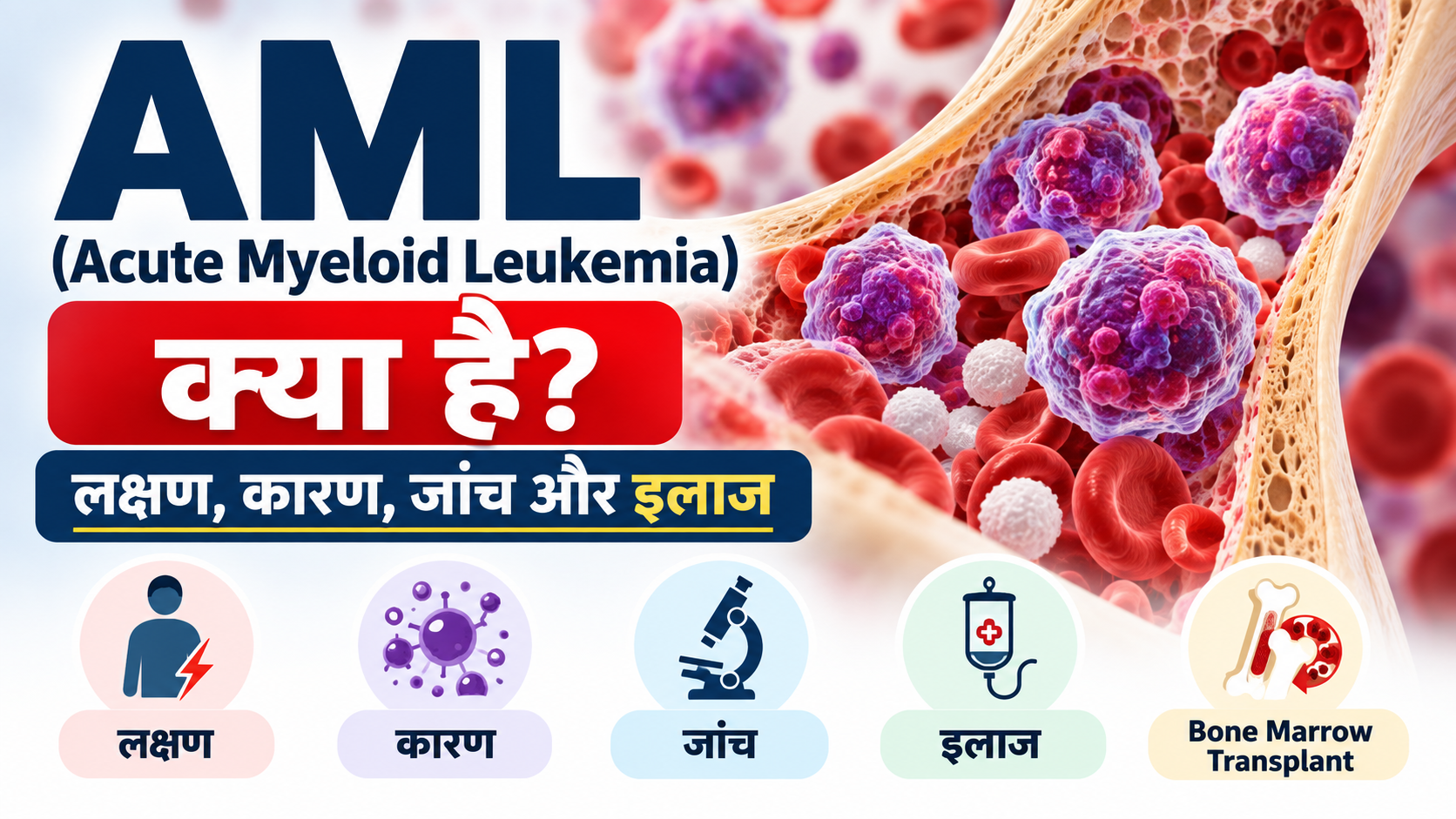
Acute Myeloid Leukemia (AML) एक तेजी से बढ़ने वाला Blood Cancer है, जिसमें bone marrow और blood में असामान्य immature cells, जिन्हें myeloblasts कहा जाता है, तेजी से बढ़ने लगते हैं। ये abnormal cells normal blood-cell production को प्रभावित करते हैं, जिसके कारण Hemoglobin, White Blood Cells और Platelets कम हो सकते हैं।
AML का untreated disease तेजी से बढ़ सकता है, इसलिए diagnosis के बाद timely specialist evaluation और treatment महत्वपूर्ण होता है। Detailed treatment pathways के लिए आप Acute Myeloid Leukemia (AML) Care पर अधिक जानकारी प्राप्त कर सकते हैं।
Expert Video Guides: AML Treatment & Insights
Hematology & BMT specialists द्वारा AML diagnosis, clinical care और bone marrow transplant पर विस्तृत जानकारी देखें:
🩸 AML क्या है और यह कैसे होता है?
हमारी Bone Marrow एक तरह की blood-cell factory है, जहाँ blood stem cells से RBCs, WBCs और platelets बनते हैं। AML में myeloid lineage की immature cells में genetic और molecular abnormalities के कारण abnormal proliferation शुरू हो जाती है।
धीरे-धीरे ये abnormal cells bone marrow में जगह घेरने लगती हैं और normal blood-cell production कम हो सकती है। इसी वजह से AML में anemia, low platelets और neutropenia/infection risk जैसी समस्याएँ दिखाई दे सकती हैं।
AML एक single disease नहीं है। इसके अलग-अलग molecular और genetic subtypes होते हैं। इसलिए आज AML diagnosis केवल blast count तक सीमित नहीं है; flow cytometry, cytogenetic testing और molecular testing treatment planning में महत्वपूर्ण भूमिका निभाते हैं।
⚠️ AML के शुरुआती लक्षण क्या हैं?
AML के symptoms कई बार सामान्य कमजोरी या infection जैसे लग सकते हैं। Normal blood cells की production प्रभावित होने पर मरीज में निम्न समस्याएँ हो सकती हैं:
- लगातार थकान और कमजोरी
- बार-बार बुखार या infections
- त्वचा का पीला या फीका दिखना
- आसानी से bruising होना
- नाक या मसूड़ों से bleeding
- शरीर पर छोटे लाल-बैंगनी spots यानी petechiae
- सांस फूलना
- चक्कर या कमजोरी
- Unexplained weight loss
- हड्डियों या joints में दर्द
- कुछ patients में lymph nodes, spleen या अन्य tissues से जुड़े symptoms
NCI के अनुसार AML में weakness, fever, infection, pallor और bleeding common presenting features में शामिल हैं। हर patient में सभी symptoms मौजूद हों, यह जरूरी नहीं है। कई बार CBC report में abnormal blood counts मिलने के बाद आगे की जांच से AML का पता चलता है।
🧬 AML होने के कारण और Risk Factors
AML का एक ही कारण नहीं होता। कई patients में कोई स्पष्ट कारण identify नहीं हो पाता। कुछ factors AML के risk को बढ़ा सकते हैं, जैसे:
- Previous chemotherapy
- कुछ प्रकार की radiation exposure
- Smoking
- पहले से मौजूद Myelodysplastic Syndrome (MDS) या अन्य bone marrow disorders
- कुछ inherited genetic conditions
लेकिन किसी व्यक्ति में risk factor होना यह साबित नहीं करता कि उसे AML होगा। इसी तरह बिना किसी obvious risk factor के भी AML विकसित हो सकता है।
AML की जांच कैसे होती है?
यदि CBC में unexplained abnormalities हों या symptoms AML की संभावना की ओर संकेत करें, तो Hematologist आगे की detailed evaluation कर सकते हैं:
1. Complete Blood Count (CBC)
CBC में Hemoglobin, WBC count, differential count और Platelet count देखे जाते हैं। AML में इन blood-cell lines में एक या अधिक abnormalities हो सकती हैं।
2. Peripheral Blood Smear
Peripheral smear में blood cells को microscope के माध्यम से देखा जाता है। इसमें blast cells और blood-cell morphology में abnormalities दिखाई दे सकती हैं।
3. Bone Marrow Test
Bone Marrow Aspiration and Biopsy AML diagnosis का महत्वपूर्ण हिस्सा है। इससे marrow में abnormal cells की संख्या, morphology और अन्य characteristics का assessment किया जाता है।
4. Flow Cytometry
Flow Cytometry / Immunophenotyping leukemia cells पर मौजूद specific markers की पहचान करने में मदद करता है। इससे AML को दूसरी leukemia types से differentiate करने और disease phenotype समझने में सहायता मिलती है।
5. Cytogenetic और Molecular Tests
आज AML treatment planning में genetic और molecular testing अत्यंत महत्वपूर्ण है। Cytogenetics, FISH और molecular tests chromosome तथा gene abnormalities (जैसे FLT3, NPM1, CEBPA आदि) की पहचान करते हैं। इन results से disease classification, risk assessment और targeted treatment selection में सहायता मिलती है।
AML diagnosis के बाद केवल “leukemia है या नहीं” जानना पर्याप्त नहीं होता। Disease का subtype और molecular profile समझना भी treatment strategy तय करने के लिए महत्वपूर्ण है। Clinical consultation के दौरान आवश्यक प्रश्नों की सूची के लिए आप Questions to Ask Your Hematologist पढ़ सकते हैं।
💊 AML Treatment: Acute Myeloid Leukemia का इलाज कैसे होता है?
AML का treatment हर patient के लिए एक जैसा नहीं होता। Treatment plan बनाते समय age, overall health, AML subtype, cytogenetic और molecular findings, disease risk, previous treatment और MRD status जैसे factors को ध्यान में रखा जाता है। इसलिए AML Treatment हमेशा individualized approach के साथ किया जाना चाहिए।
AML में Chemotherapy की भूमिका
कई AML patients में treatment का पहला उद्देश्य leukemia cells को तेजी से कम करना और remission प्राप्त करना होता है। इसके लिए intensive या lower-intensity treatment approaches का चयन patient की clinical स्थिति और disease biology के अनुसार किया जाता है। Intensive chemotherapy में cytarabine-based regimens का उपयोग किया जाता है, जबकि unsuitable patients में targeted medicines के साथ lower-intensity approaches consider की जाती हैं। Treatment के दौरान CBC, kidney function, liver function, infections और treatment response की नियमित monitoring आवश्यक होती है।
Targeted Therapy और Molecular Testing
AML में molecular testing केवल diagnosis के लिए नहीं, बल्कि treatment selection के लिए भी महत्वपूर्ण है। कुछ patients में specific genetic abnormalities मिलने पर targeted therapy treatment plan का हिस्सा बन सकती है (जैसे selected patients में FLT3-directed therapy या अन्य molecularly targeted medicines)। इसीलिए AML diagnosis के बाद comprehensive molecular profiling treatment planning का महत्वपूर्ण हिस्सा बन सकता है।
Consolidation Treatment क्या है?
यदि initial treatment के बाद patient remission में आता है, तो leukemia के वापस आने के risk को कम करने के लिए आगे का treatment दिया जाता है, जिसे consolidation therapy कहा जाता है। कुछ patients में additional chemotherapy पर्याप्त हो सकती है, जबकि selected higher-risk patients में Allogeneic Bone Marrow Transplant / Stem Cell Transplant पर विचार किया जा सकता है।
AML में Bone Marrow Transplant कब किया जाता है?
Bone Marrow Transplant (BMT) AML के कुछ patients में potentially curative treatment strategy हो सकती है। लेकिन हर AML patient को transplant की आवश्यकता नहीं होती। Transplant पर विचार करते समय disease risk, molecular profile, remission status, MRD, patient की age और fitness, donor availability तथा transplant-related risks को देखा जाता है। विशेष रूप से high-risk AML या ऐसे patients जिनमें relapse का risk अधिक माना जाता है, उनमें remission प्राप्त होने के बाद allogeneic stem cell transplant पर specialist team विचार कर सकती है।
🔬 AML में MRD Monitoring क्यों जरूरी है?
MRD – Measurable Residual Disease testing treatment response को अधिक sensitive तरीके से assess करने में मदद कर सकती है। किसी patient में conventional microscopy से remission दिखाई देने के बावजूद बहुत कम संख्या में leukemia cells मौजूद हो सकते हैं। MRD testing इन residual cells को detect करने में मदद कर सकती है।
MRD assessment के लिए clinical situation के अनुसार flow cytometry, molecular testing या अन्य sensitive techniques का उपयोग किया जा सकता है। इस information का उपयोग आगे के treatment decisions और relapse-risk assessment में किया जा सकता है।
🏥 AML Treatment in India
भारत में AML Treatment के लिए comprehensive hematology services उपलब्ध हैं, जिसमें diagnosis, molecular testing, chemotherapy, targeted therapy, MRD monitoring और selected patients के लिए Bone Marrow Transplant शामिल हो सकते हैं।
BMT Next at Marengo Asia Hospitals, Gurugram & Faridabad में Hematology-Oncology और Bone Marrow Transplant care के अंतर्गत AML patients के लिए multidisciplinary treatment planning की जाती है। Treatment approach patient की disease biology, molecular findings और clinical condition के अनुसार तय की जाती है।
AML Treatment in Gurugram या AML Treatment in Faridabad की तलाश कर रहे patients के लिए specialist hematology evaluation महत्वपूर्ण है, क्योंकि AML में treatment decisions disease subtype और molecular profile के आधार पर काफी अलग हो सकते हैं। Treatment experiences और recovery journeys के लिए आप Patient Testimonials भी देख सकते हैं।
💰 AML Treatment Cost
AML Treatment Cost in India हर patient में अलग हो सकती है। Cost पर treatment intensity, chemotherapy drugs, targeted medicines, diagnostic and molecular tests, hospital stay, transfusion requirements, complications और आवश्यकता होने पर Bone Marrow Transplant जैसे factors प्रभाव डालते हैं।
यदि transplant की आवश्यकता हो, तो donor evaluation, conditioning, stem-cell infusion और post-transplant monitoring भी overall treatment cost का हिस्सा बन सकते हैं। BMT Next के माध्यम से पात्र patients को उपलब्ध State Government schemes और NGO support के अनुसार financial assistance प्राप्त करने में सहायता की जा सकती है। Eligibility और available support patient-specific assessment पर निर्भर करता है।
AML का इलाज कहाँ कराएं?
AML एक complex blood cancer है और इसके लिए ऐसी team की आवश्यकता होती है जो Hematology, Hemato-Oncology, Molecular Diagnostics, MRD Monitoring और Bone Marrow Transplant जैसी services को एक coordinated treatment plan में शामिल कर सके।
समय पर diagnosis और सही risk assessment से treatment strategy निर्धारित करने में सहायता मिलती है। AML में symptoms या abnormal CBC को लंबे समय तक ignore करने के बजाय Hematologist से timely evaluation कराना महत्वपूर्ण है।